
Your annual mileage is a declaration, just like your address or the main driver. Set correctly, it lowers the premium. Set wrongly, it shrinks the payout on the day you need it. Everything depends on the mechanism you signed, and most drivers have no idea which one that is.
Why does your mileage appear in the policy?
Because the less a car is driven, the fewer accidents it has, and the insurer sets its premium on that probability. Under Belgium's Law of 4 April 2014 on insurance, mileage is therefore a circumstance you must declare accurately as soon as it counts for the insurer in assessing the risk.
The Belgian benchmark has moved. According to the 2025 annual report of Car-Pass, the non-profit body that legally records odometer readings in Belgium, a car covered 14,172 km on average in 2025, with huge gaps by age: 20,225 km in its first year, 12,074 km at ten years, 7,903 km at twenty.
Which mileage mechanism did you sign?
Three families of contracts exist on the Belgian market, and they react to an overrun in completely different ways. The product name is not enough to tell them apart: "low-mileage driver", "pay per km" or "mileage bonus" hide different mechanics from one company to the next. Before declaring anything, find yours in your particular conditions, on the line that shows the announced mileage. If no line mentions it, your policy does not use it, and the question ends there.
| Mechanism | Public example | If you drive more | If you drive less |
|---|---|---|---|
| Premium recalculated on actual mileage | Assurance au Kilomètre, Belfius Direct | Top-up at year end, free kilometres beyond 25,000 km | Refund of kilometres not driven |
| Discount by mileage band | AG Bonus au kilomètre, AG Insurance | Band change to report, otherwise payout may be reduced | Lower band to request, at any time |
| Plain pricing criterion | Question asked at signing | General rules on aggravation of risk | General rules on reduction of risk |
AG Insurance's scale, published on 20 August 2024, gives the order of magnitude of a band discount. For a petrol, hybrid, CNG or electric car: 5% between 15,001 and 25,000 km, 10% between 7,501 and 15,000 km, 15% below 7,500 km. For a diesel: 5% between 7,501 and 15,000 km, 10% below 7,500 km. The discount applies to third-party liability and to own-damage cover, according to the insurer's page.
At Belfius Direct, the logic runs the other way: you estimate, you report your real mileage at year end, the premium is recalculated. In the liability section of its general conditions (edition BDKM_15062026), mileage does not appear as a condition of cover: the premium is personalised on claims history and on criteria listed in a segmentation sheet (article 64).
What happens if you drive more than declared?
You stay covered. The real question is who pays for the gap, and when.
With a recalculated premium, the gap is settled by invoice. With a band discount or a plain pricing criterion, it is settled by law: a significant and lasting rise in your mileage is an aggravation of risk that must be reported during the policy. The insurer then offers an adjustment within a month, backdated to the day the risk increased, as article 6 of Belfius Direct's general conditions provides. If a claim occurs before you have reported it and the omission can be held against you, the payout is, in principle, reduced to the ratio between the premium paid and the premium that should have been paid.
Take a policy built on a scale like the one above, with a purely illustrative base premium of 600 euros. You declared under 7,500 km and paid 510 euros with a 15% discount. Your new commute takes you to 11,000 km: the correct premium would have been 540 euros, at 10%. The ratio is 94.4%. A 6,000-euro omnium claim is then paid at about 5,667 euros, and the missing 333 euros would have cost 30 euros of premium to declare.
A deliberate lie changes the scale: an intentional under-declaration that misled the insurer opens the way to the policy being declared void, covered in our article on false declarations. Under liability cover the victim is still paid, but the insurer can claim the money back from you.
Should you report a drop in mileage?
Yes, and it is the step almost nobody takes. A lasting switch to remote work, retirement or a second car that stays in the garage all reduce the risk. Article 7 of Belfius Direct's general conditions, modelled on the law, provides for a lower premium from the day the insurer learns of it; if you cannot agree on the new price within a month, you can cancel. AG Insurance, for its part, says any change in mileage can be reported to it at any time.
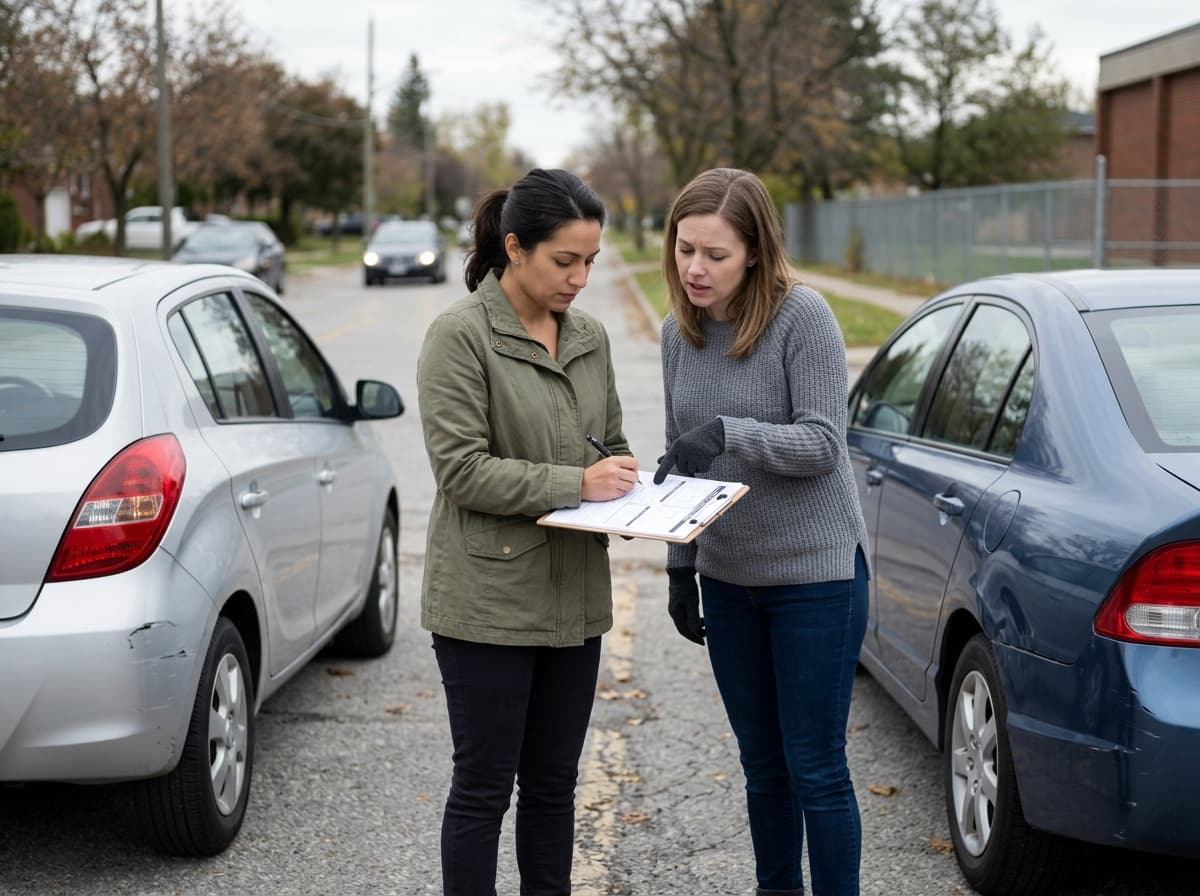
Six steps to declare an accurate mileage
Allow half an hour once, then five minutes a year.
- Find two dated readings: roadworthiness test certificates, service or tyre invoices. They all show the mileage.
- Work out your real pace by scaling the gap between the two readings to twelve months.
- Add a margin of 1,000 to 2,000 km if a move, a new job or a child at the wheel is on the horizon.
- Read the mileage line in your particular conditions and match it to a mechanism in the table above.
- Photograph the odometer on the day you sign, then at each annual renewal, with the date visible.
- Report in writing any lasting change, up or down, and keep the reply from the insurer or your broker.
| Step | Useful document | Time | What to keep |
|---|---|---|---|
| Real pace | Roadworthiness test, invoices | 15 minutes | Copy of both readings |
| Choosing the figure | Particular conditions | 10 minutes | Annotated mileage line |
| Starting proof | Odometer photo | 1 minute | Dated photo on your phone |
| Annual follow-up | Photo at renewal | 1 minute | Series of photos |
| Lasting change | Email or letter | 5 minutes | Endorsement or written reply |
The trail that gives away an understated mileage
Mileage is easy to rebuild. Car-Pass received 22.98 million odometer readings in 2025, 28.3% of them at roadworthiness tests and 22.4% sent directly by connected cars, and the history of an active vehicle holds twenty readings on average. After a claim, the assessor reads the odometer, and your own papers speak:
- the roadworthiness test certificate, dated and with the mileage;
- service, tyre or bodywork invoices;
- the Car-Pass document handed over when buying a used car;
- trip data from a connected car or a telematics box;
- the distance between your home and your workplace, which the insurer often knows from your declared use.
Commuting: private or business use?
In principle, the home-to-work commute counts as private use. Rounds, deliveries and client visits need a specific mention, unless your general conditions are worded otherwise.
To compare policies on their cover rather than their mileage discount, the car insurance comparison tool sets products side by side and the ranking of the best car insurers details what each company covers and excludes. The simulator estimates how mileage affects your premium. To reread the mileage line and the other statements in your policy, see the particular conditions and the list of documents to keep in the car.
If you disagree with a reduced payout, the Insurance Ombudsman, Belgium's free dispute service for insurance consumers, examines complaints, and the FSMA, the Belgian Financial Services and Markets Authority, checks that insurers and intermediaries follow conduct rules. These rules describe the general framework: your particular conditions prevail and can adjust it.
This site informs and compares. It is not an insurance intermediary and gives no individual recommendation.
Sinistres & démarches comparator
Compare all sinistres & démarches side by side.
Compare now
Frequently asked questions
Grégory conseille des automobilistes belges sur leurs contrats d'assurance depuis plus de dix ans. Il décortique les formules RC, mini-omnium et omnium, compare les compagnies du marché belge et traduit les conditions générales en langage clair. Sa règle : aucune recommandation sans avoir lu les exclusions.