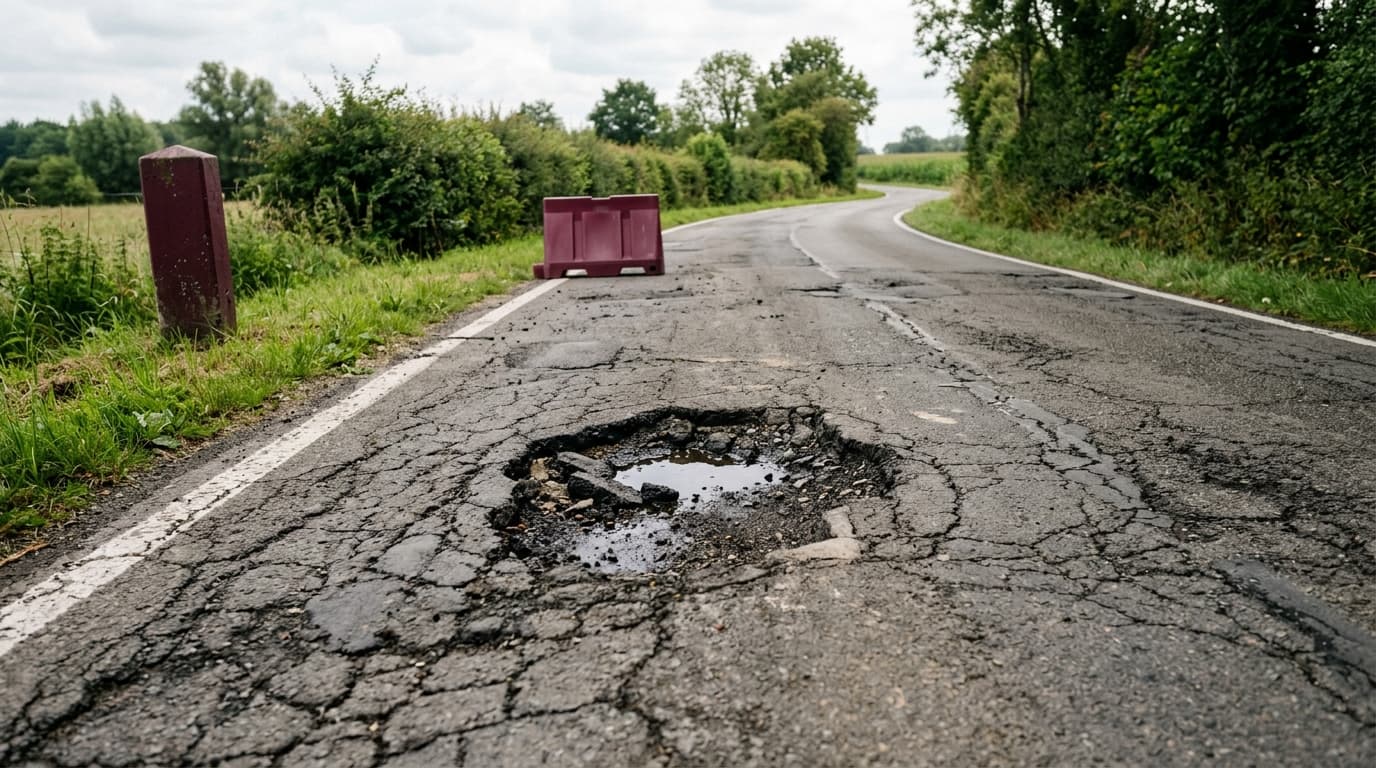
Pothole damage is only covered by omnium, the Belgian term for own-damage car cover, never by third-party liability alone. A separate claim exists against the road authority, provided you can prove its fault. The two routes do not add up. Pick one before any payout, not after.
Is pothole damage covered by your car insurance?
Yes, if you hold full omnium, or mini omnium with a material damage guarantee added. No under third-party liability alone. No, most of the time, under base mini omnium.
The guarantee that pays for hitting an obstacle in the road, with no identified third party, has a precise name in Belgian general conditions: material damage cover (dégâts matériels). At Ethias, article 5 of the general conditions for motor vehicles defines it as covering damage to the vehicle following an accident caused by an impact, a fall, a rollover or a collision, and states that mini omnium and full omnium are only granted where expressly stated in the particular conditions. A pothole fits squarely into the definition of an impact. The question is therefore never "do I have omnium?" but "does this exact line appear on my policy?"
| Formula | Bodywork, rims, steering | Tyres alone |
|---|---|---|
| Liability only | No | No |
| Base mini omnium | No, unless an option was added | No |
| Mini omnium with material damage, or full omnium | Yes, if stated in the particular conditions | Rarely |
| Legal expenses cover | Repairs nothing, funds the claim | Repairs nothing, funds the claim |
No recommendation without reading the exclusions. On this exact question, the rule is checked by searching your own policy for one phrase: "dégâts matériels".
Can insurance and the road authority claim be combined?
No.
The Service public de Wallonie (SPW), Wallonia's public works administration, states it plainly on its official compensation page: a claimant already paid by an insurer for the same loss cannot obtain a second payout from the road authority. The burden of proof, meanwhile, sits with the driver, who must show the authority was at fault for the damage occurring.
Since 1 January 2025, that liability rests on article 6.5 of the new Book 6 of the Civil Code, which replaced the former article 1382: everyone is liable for damage they cause to another through their fault. Three cumulative elements are needed: a fault, a failure to maintain the road surface, for instance, a loss, the priced repair quote, and a causal link between the two. None of the three is presumed.
The choice between the two routes is simple. Omnium with a deductible lower than the damage: insurance is almost always faster. No material damage cover, or a deductible far exceeded: the claim against the road authority becomes the only option, free but slow and uncertain, as the next section shows.
What should you do in the days after the damage?
Six steps, in this order, before picking a route.
- Photograph the pothole and the damage to the car immediately, with the phone's timestamp on, a wide shot then close-ups.
- Do not move the car before taking photos if the damage is significant or the hole is still dangerous to other road users.
- Call the police if there is an immediate danger to traffic. The police report strengthens both files, the insurer's and the road authority's.
- Get a priced repair quote before choosing. Deductible, premium impact and timeline are not guessed, they are calculated.
- Identify the exact authority managing that stretch of road (table below) and report the defect, even if you do not intend to claim.
- Keep every document, photo, quote, police report, letter, until the file closes, whichever route you take.
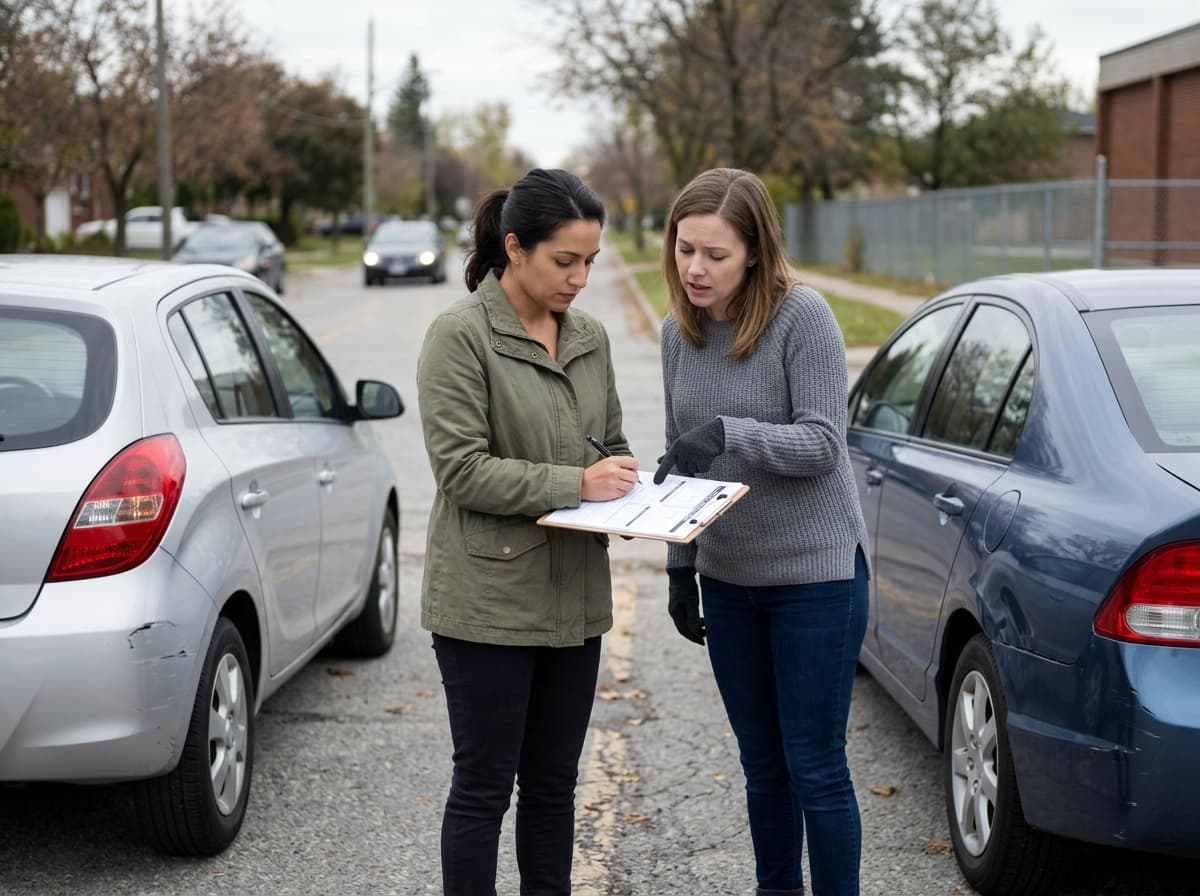
The road authority: three levels, three procedures
Belgium's road network is managed by several authorities, regional, provincial and municipal, and the procedure changes depending on which one is involved.
| Authority | Contact and procedure | Documents required | Indicative timeline |
|---|---|---|---|
| SPW and SOFICO (Wallonia) | The relevant regional roads department, free hotline 1718 | Sworn statement, quote or invoice, photos, police report where available | 6 months to 1 year, free of charge |
| AWV (Flanders) | schade.awv@mow.vlaanderen.be, preferably through your insurer | Precise location, description of the damage, quote, photos | No official timeline published |
| Bruxelles Mobilité | Brussels regional roads department | File comparable to both regional regimes | Regional ombudsman still being set up in Brussels |
| Municipality | Local roads department, Charleroi for instance on 071/86.94.02 | Identity, precise account, quote, statement of no double compensation | Acknowledgement within 15 days, decision follows separately |
One common mix-up is worth correcting. The regional roads department manages neither municipal roads nor, usually, motorways licensed to a separate operator such as SOFICO in Wallonia. Any doubt about a road's status is settled with a call to Wallonia's free hotline or the municipality's roads department, before even considering a claim.
What are your chances of being compensated?
Modest, and recently documented on the Flemish side.
The Agentschap Wegen en Verkeer (AWV), Flanders' roads agency, released its five-year figures on 19 July 2026: 3,016 claims filed between 2021 and 2025, about a third accepted, for a total of 2,359,231.07 euros paid out. 2024 was the peak year with 772 claims, before a sharp drop to 539 in 2025. Antwerp province leads with 309 claims, ahead of Flemish Brabant's 130. The agency's spokesperson, Katrien Kiekens, sums up the most common reason for refusal: a real causal link between the damage and the road's condition has to be established, or the file is closed.
Wallonia publishes no equivalent success-rate figure, only a processing timeline and the fact that the process is free. The asymmetry between the two regions shows up in the information made available to drivers, too.
An older estimate circulates on the topic, around a 50% chance in a civil lawsuit, put forward in 2020 by an industry website. That figure concerns only court proceedings, not an administrative claim to the road authority, and it is six years old. Treat it as a rough order of magnitude, not current data.
Is a tyre burst on its own reimbursed?
Almost never.
DVV writes it in its own guide: omnium generally will not step in if the damage concerns only the tyres. P&V goes further and explicitly excludes tyre damage unless other parts of the vehicle were also affected in the same event. Moniteur Automobile confirms the same dividing line from its side. Three competing sources, the same exclusion: four tyres slashed by the same hole, with no other mark on the car, fall outside cover at most Belgian insurers.
That changes as soon as a rim is bent, a body panel is marked, or the steering geometry is thrown off in the same impact. The file then covers all the damage, tyres included.
Five common refusals on this type of claim
- Damage affecting only the tyres, with no other loss recorded in the same event.
- A vehicle that was not up to date with its roadworthiness inspection at the time.
- Damage reported several weeks later, with no date or evidence tying it to that specific pothole.
- Compensation already obtained from the road authority for the same claim.
- Normal wear on suspension or tyres presented afterwards as a single impact.
To place this guarantee within your policy as a whole, the car insurance comparison tool sets formulas side by side guarantee by guarantee, and the ranking of the best car insurers details what each company covers. The quiz takes two minutes if you are unsure about the level of cover. The method for reading your own particular conditions is set out in the dedicated article, and the exact scope of another common type of damage, a windscreen, is detailed in the article on windscreen and glass cover.
Belgium's liability rules behind a claim against a road authority sit in Book 6 of the Civil Code, in force since 1 January 2025. The official compensation procedures are described by the Service public de Wallonie and by the Agentschap Wegen en Verkeer. On the insurance contract itself, the FSMA, the Belgian Financial Services and Markets Authority, supervises intermediaries, and the Insurance Ombudsman, the free Belgian dispute service for insurance consumers, handles disputes over the scope of a guarantee. The positions quoted from DVV and P&V are public and available directly on their sites.
This site informs and compares. It is not an insurance intermediary and gives no individual recommendation.
Sinistres & démarches comparator
Compare all sinistres & démarches side by side.
Compare now
Frequently asked questions
Grégory conseille des automobilistes belges sur leurs contrats d'assurance depuis plus de dix ans. Il décortique les formules RC, mini-omnium et omnium, compare les compagnies du marché belge et traduit les conditions générales en langage clair. Sa règle : aucune recommandation sans avoir lu les exclusions.