
Three years from the event, five at most barring fraud: that is the window in which a car insurance dispute can still open in Belgium, and so the benchmark for sorting your papers. Keep a claim file five years, the policy and its conditions up to five years after it ends, and the rest for less.
How long should you keep car insurance documents in Belgium?
It depends on the paper, and the sorting rule fits in a table. The periods below are broker recommendations built on the limitation period: no text forces you to keep a renewal notice, but you will be the only person able to produce it on the day someone asks.
| Document | Suggested period | Starts from | What it proves |
|---|---|---|---|
| Signed particular and general conditions | 5 years | The end of the policy | What was covered, excluded, capped |
| Full claim file | 5 years | The date of the event | The facts, the documents, what was paid |
| Cancellation letter and proof of sending | 5 years | The effective date of cancellation | That the policy really ended |
| Renewal notices and proof of payment | 3 years | Each payment | That the premium was paid on a given date |
| Claims history certificate received | Until the new policy is signed, then 1 year | The day it is handed over | Your claims record |
| Invoice for an expensive accessory or option | As long as the car has omnium cover | The purchase | The value to compensate after theft or loss |
| Expired insurance certificate | Until expiry, then the latest version with the policy | The end of validity | The insured period |
A self-employed person or a company deducting the premium adds a separate constraint: the Belgian seven-year accounting rule.
Why three years, and not two as on French pages?
Because the law is different. French guides talk about a two-year limitation period, which comes from the French Insurance Code. In Belgium, article 88 of the law of 4 April 2014 on insurance sets three years from the event that gives rise to the action, and no more than five years from that event, barring fraud. The Constitutional Court upheld this three-year period for all actions arising from an insurance contract, as an LLJ note summarises.
Take a file. You report omnium damage on 14 March 2026. The insurer pays 3,200 euros on a 4,000 euro quote, applying a depreciation deduction; you disagree and the discussion drags on. Three years from the event lead to 14 March 2029. If you only learned the cause of the dispute later, the outer limit is 14 March 2031. Your whole file must therefore exist on that date, not just until the end of the year of the claim.
One trap. The period does not run from the end of the policy but from the event. Cancelling therefore resets nothing. Working out your own case (interruption, late knowledge) is a job for legal advice or the Insurance Ombudsman, which examines consumer complaints free of charge.
Do general conditions change while you keep them?
Yes, and it is the number one reason to keep the PDF.
General conditions published by insurers carry an edition date. The AXA Belgium assistance cover quoted in our article on breakdown cover is a 06.2021 edition, Baloise's Mobility Safe 1 sheet is dated February 2026, Belfius Direct Assurances' sheet October 2024. The text online today is not necessarily the one you signed: an exclusion added since, a raised excess, a reworded depreciation definition, and you are arguing from a document that is no longer yours.
The fix takes a minute. When you sign, download the PDF of the general conditions, rename it with the date and the insurer, and file it next to the particular conditions. The step-by-step reading of particular conditions shows where to find the edition reference.
Five papers that no longer serve any purpose
Sorting also means lightening the load. Once the period has passed, these can go:
- insurance certificates from earlier years, once the next one has arrived;
- sales brochures and proposals you did not take up;
- competitors' quotes after the chosen policy is signed;
- reminder e-mails and acknowledgements with no financial stake;
- paper copies of a document you already hold as a dated PDF.
Do keep the photos of the car taken when the policy started. They are not in the table because they have no period of their own: they stay with the policy as long as it lasts, with the odometer reading taken the same day, whose importance is explained in the article on the mileage declaration.
Paper or digital: where should the file live?
In both, for different reasons.
Your insurer's portal is handy, but it belongs to the insurer. After a cancellation, access to old documents may stop, and a broker who ceases trading leaves you only what you downloaded. A digital copy on your own storage, with a backup, solves that. Paper keeps a role for two items: the cancellation letter with its proof of sending, and the originals the federal police require on the road, listed in our article on mandatory car documents.
Only the insurance certificate, notes the FPS Economy, can travel on a durable medium with the policyholder's consent. In Belgium there is no "insured vehicle memo" to keep for fifteen days: that vocabulary is French.
Six steps to build your insurance file
Allow twenty minutes once, then five minutes at each renewal.
- Create a single folder per policy, named with the insurer and the year of signing.
- Save the PDF of the signed general conditions, with the edition date in the file name, and the particular conditions.
- Add dated photos of the car and the odometer on the day the policy starts.
- File every renewal notice and proof of payment on receipt, in one sub-folder per year.
- Open one sub-folder per claim with the date of the event as its title: accident report, photos, assessor's report, letters, proof of payment. Note the date your fifth year ends.
- When cancelling, add the registered letter and the claims history certificate, then keep the whole set five years.
What should you do with the papers when the policy ends?
Nothing gets thrown away. The end of the policy does not close claims from the insured period, as the 14 March example shows. The guide to cancelling car insurance covers the letter and the deadlines; as for papers, keep three items: the letter with proof of sending, the claims history certificate that follows you to the new insurer, and the last insurance certificate. What you tell the new insurer must also stay consistent with that record, as the article on false declarations explains.
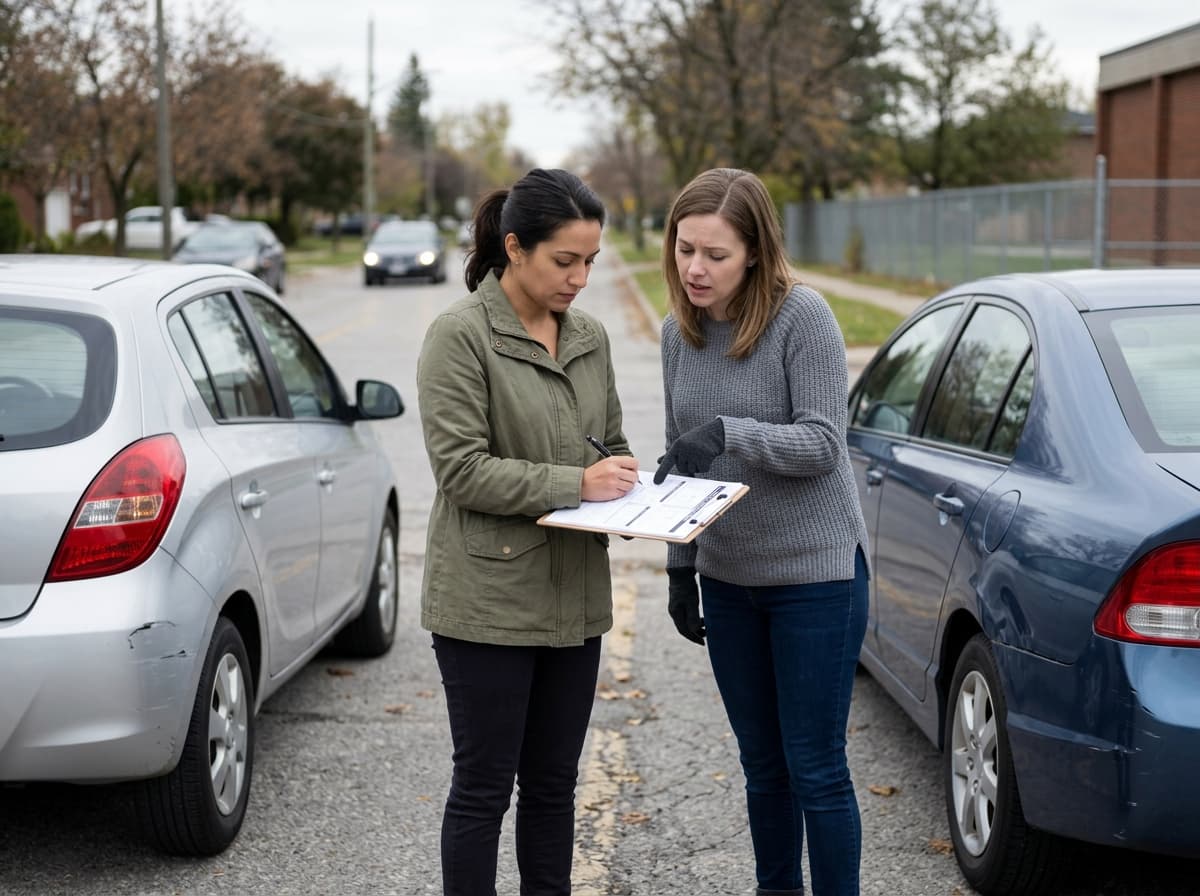
To compare what each policy covers before you sign, the car insurance comparison tool sets the options side by side and the ranking of the best car insurers details what each company covers and refuses. The quiz helps pin down the level of cover you need. If the claim has already happened, the steps are in the article on reporting a claim. The FSMA, the Belgian Financial Services and Markets Authority, checks that insurers and intermediaries follow conduct rules.
This site informs and compares. It is not an insurance intermediary and gives no individual recommendation.
Sinistres & démarches comparator
Compare all sinistres & démarches side by side.
Compare now
Frequently asked questions
Grégory conseille des automobilistes belges sur leurs contrats d'assurance depuis plus de dix ans. Il décortique les formules RC, mini-omnium et omnium, compare les compagnies du marché belge et traduit les conditions générales en langage clair. Sa règle : aucune recommandation sans avoir lu les exclusions.