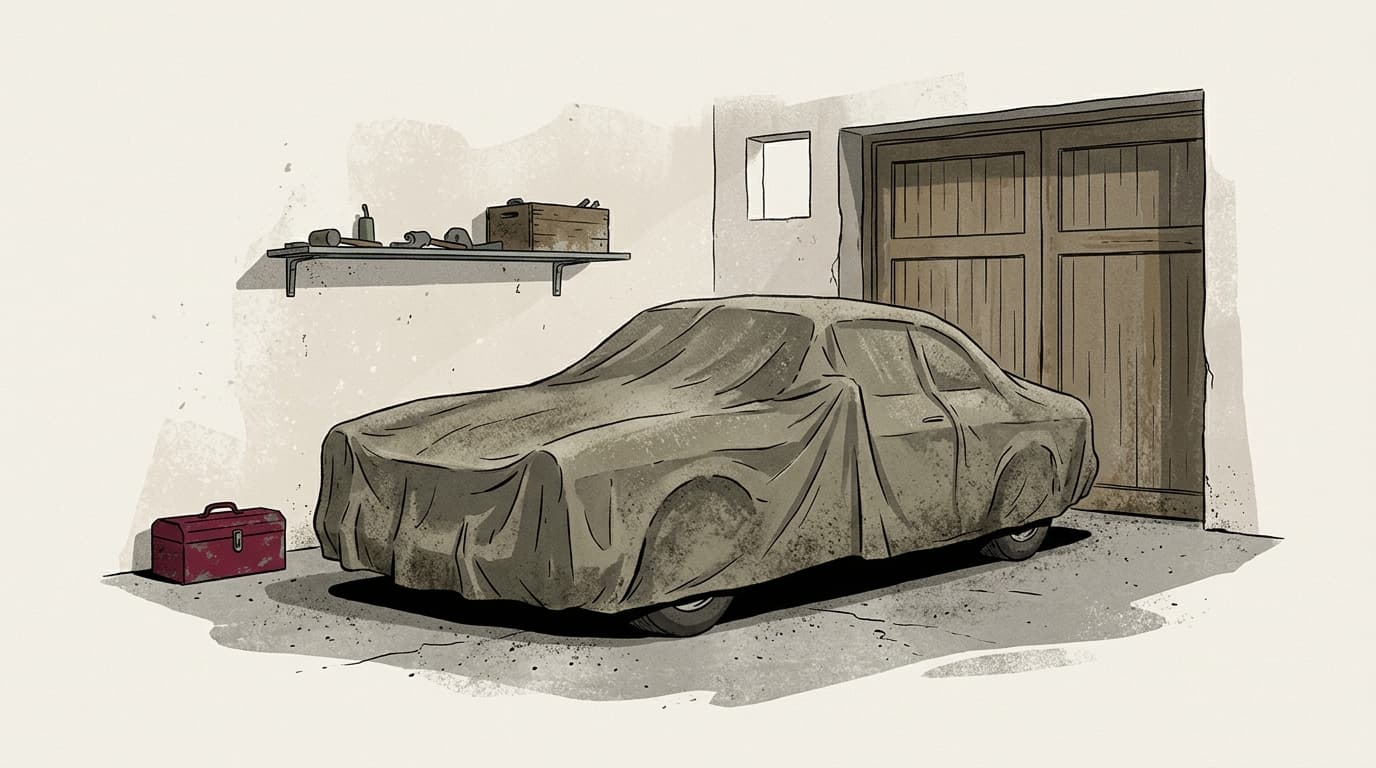
A non-running car: the answer depends on where it sleeps
The starting rule is blunt: a registered vehicle on the public road must be covered by third-party liability insurance, whether it runs or not. Assuralia, the Belgian insurance federation, says so in its motor insurance document. A breakdown changes nothing.
Everything therefore turns on a point insurers' leaflets barely mention: where the car spends its nights. On the street outside your house, RC is compulsory. Locked in a garage or on private ground, it opens room for negotiation with your insurer, never an automatic right.
This site informs, it does not replace a reading of your contract. Everything below holds in principle, subject to your particular conditions.

Which situation, which obligation?
A table beats a long paragraph. The situations below cover most questions, with the cautious answer for each.
| Situation | RC compulsory? | What you can ask for |
|---|---|---|
| Breakdown, car left on the street | Yes | Nothing: stay covered |
| Car in a private garage, return planned | Negotiable | Suspension or dormant formula |
| Car in a garage, no more use | Negotiable | Cancellation and plate deregistration |
| Car under restoration, plate kept | To check | Classic-car or limited-use contract |
| Car moved, even briefly | Yes | Restore RC before moving it |
The last case catches many people. Moving a suspended vehicle ten metres along the road, to reach the technical inspection or the body shop, amounts to driving without RC.
What happens to the car during a suspension?
A suspension does not make the car invisible to risk. It moves the cover around. RC disappears, which explains most of the premium drop, but passive cover often stays: fire, theft, natural forces. That is exactly what protects a valuable vehicle sleeping a few months in a garage.
Terms vary. Belgian comparison sites report minimum periods of 30 or 60 days, proof of private parking (sworn statement, photos) and a cap of a few months. I found no legal text fixing these figures: they are company practices, so lines to look for in your conditions.
A worked example, with a fictional premium of €480 a year for RC plus mini-omnium. A six-month immobilisation costs €240 pro rata if you keep the whole contract. The lowest criminal fine quoted by comparison sites for driving without insurance, €800, equals nearly two years of that premium. The arithmetic is quickly done.
Why not simply let the contract run?
Letting it run is the simplest option and rarely the most expensive. If your premium is a few hundred euros and the car returns to the road within the year, a suspension saves little and brings administrative friction: evidence, reinstatement delay, a new start date to plan.
Two situations argue the other way. A classic or project car sleeping for years wastes money on RC. And a household's second car that has become useless deserves a review with a broker rather than renewal out of habit.
Suspend, cancel or hand back the plate: choose by duration
Three exits exist, and they are not equivalent.
- Suspending suits an immobilisation of a few months with a planned return: the contract survives, and so does your degree on the Belgian bonus-malus scale (0-22).
- Cancelling suits a car that will not drive again: after the first year, notice is 2 months, see our guide to cancelling car insurance.
- Deregistering the plate with the DIV (the Belgian vehicle registration authority) closes the file cleanly and serves as evidence for the refund of the unused premium.
The most misunderstood exit is the second: cancelling with no new cover, then putting the car back on the road a month later, means restarting from an interrupted history.
What does the law say, and why is France no model?
The best-ranked articles for this query are French. They talk about a "garage mort", a vehicle "unfit to run" and an insured-vehicle register that spots cars parked outside. None of these notions transposes as is. Belgium rests on the law of 21 November 1989 on compulsory motor liability insurance, completed by the Insurance Act of 4 April 2014, which governs the contract itself.
If an uninsured vehicle causes an accident, the Fonds commun de garantie compensates the victim and then turns against the person responsible. The Assuralia motor insurance document restates the obligation for any vehicle on the public road. For the supervision of insurers and brokers, the reference is the FSMA, the Belgian financial services and markets authority.
How to check your own contract in ten minutes
Open your particular conditions, then your general conditions, and look for three things in this order.
- An article on suspension or dormant status: minimum period, evidence, restart date.
- The list of cover kept: theft, fire, natural forces, or nothing at all.
- The restart conditions: reinstatement delay, any inspection, a new declaration of use and mileage.
If the article is missing, write to your broker or insurer and ask for the answer in writing. A false declaration of use, for instance "private garage" when the car sleeps on the street, opens the door to false declaration and its sanctions. For what you declared, also reread your mileage declaration.
Verdict: the place decides, the contract settles it
To compare formulas on the market, see the ranking of the best car insurers in Belgium, then compare offers for your vehicle. The quiz points you in two minutes if you hesitate over the level of cover.
Formules & garanties comparator
Compare all formules & garanties side by side.
Compare now
Frequently asked questions
Grégory conseille des automobilistes belges sur leurs contrats d'assurance depuis plus de dix ans. Il décortique les formules RC, mini-omnium et omnium, compare les compagnies du marché belge et traduit les conditions générales en langage clair. Sa règle : aucune recommandation sans avoir lu les exclusions.