
When can you cancel your car insurance in Belgium?
After the first year of the contract, you can cancel your car insurance at any time with a 2-month notice period. This is the big change from the reform that came into force on 1 October 2024: the notice period, which used to be 3 months, dropped to 2 months, and you no longer have to wait for the contract's anniversary date to leave.
In practice, once the first twelve months have passed, your contract becomes far more flexible. You notify your cancellation, the 2-month clock starts, and the cover ends at the close of that period. During the very first year, however, you generally remain committed until the annual renewal — unless you invoke one of the special cases detailed below (claim, premium increase, sale of the vehicle).
Do you still need to send a registered letter?
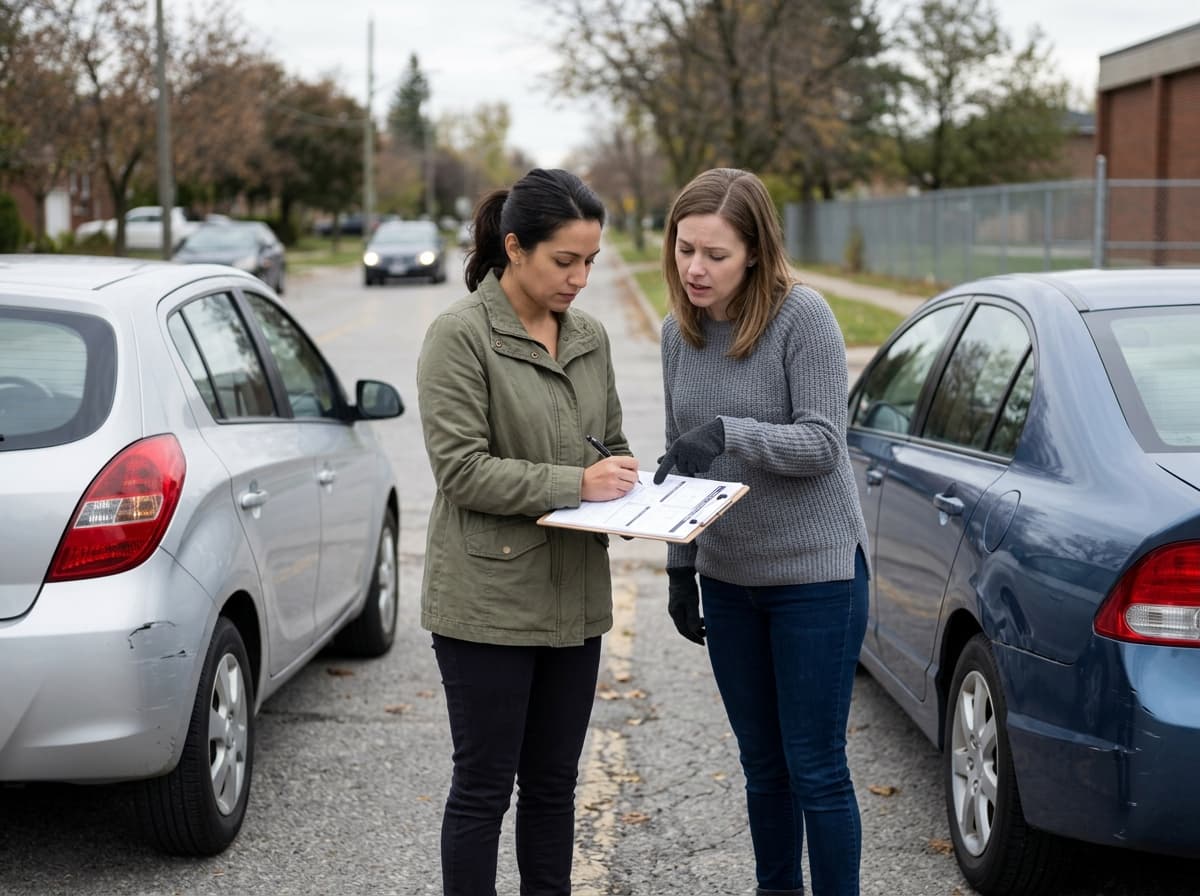
No: since 1 October 2024, a registered letter is no longer required to cancel your car insurance. You can now notify your departure digitally — email, online customer portal or a dedicated form — just as well as by regular post.
What the law requires is not a specific format but a dated proof of sending. That date is what starts the 2-month notice period. An email with a read receipt, an online form that generates a confirmation, or a plain letter with proof of posting will all do. The pitfall to avoid: sending a message and keeping no trace. If there is a dispute over the date, you are the one who must be able to prove when the request went out. So always keep a timestamped copy.
How do you cancel your car insurance, step by step?
The process comes down to four steps: compare, take out the new cover, notify the cancellation, then check the effective date. Taken in this order, they avoid the main danger — ending up uninsured between two contracts.
Start by comparing the offers on the Belgian market to check that switching is genuinely worthwhile: at equal cover, the premium gaps between AG Insurance, Ethias, AXA, Belfius Direct, KBC, Yuzzu or P&V can be significant. Next, take out the new policy with its start date set to the exact end of the old one. Then notify the cancellation to your current insurer (digital or post, with dated proof). Finally, check that you receive a cancellation confirmation and the effective end date of cover.
Can you cancel your car insurance after a claim?
Yes: after a claim, both you and your insurer can cancel the contract within the month following the payment or refusal of compensation. This cancellation generally takes effect 3 months after notification. The right works both ways: it is also how an insurer can part with a profile it now considers too risky.
If it is your insurer who cancels after a claim, don't treat it as a dead end. You remain free to find cover elsewhere, even if a recent claim may weigh on the premium offered. This is precisely the moment to compare car insurance and see how each company treats your profile: not all of them penalise a claim the same way.
In what other cases can you cancel mid-contract?
Two common situations open a right to early cancellation: a premium increase beyond indexation and the sale of the vehicle. They escape the annual-notice logic and are worth watching closely on your renewal notices.
If your insurer raises the premium beyond a simple indexation, or changes the general terms to your disadvantage, you have a period (usually 3 months from notification) to leave. Many motorists miss this right by not reading the renewal notice. When you sell the vehicle, there is no notice at all: you provide the proof of sale and the plate deregistration receipt (DIV), and the insurer refunds the unused portion of the premium, in principle within 30 days. A grace period of about 16 days also lets you transfer the contract to a new vehicle without heavy formalities.
| Situation | Notice period | Takes effect |
|---|---|---|
| After the 1st year | 2 months | 2 months after notification |
| After a claim | Within the month after compensation | ~3 months after notification |
| Premium increase (beyond indexation) | ~3 months to react | Per notification |
| Sale of the vehicle | None | On supporting documents (DIV) |
What is the pitfall to avoid at all costs?
The number-one pitfall is cancelling too early and ending up uninsured, even for a single day. In Belgium, third-party car liability insurance is mandatory, and driving without insurance is a serious offence, punishable by heavy fines and lasting complications.
The golden rule is therefore to line up, to the exact day, the end of the old contract and the start of the new one. Never sign a cancellation "just to see" without a confirmed relay cover. A gap of a few days can also be held against you at your next application, with some insurers being warier of a discontinuous history.
Is cancelling really the right move?
Cancelling only makes sense if the new contract is genuinely more advantageous at equivalent cover. Switching to save a few euros on the premium but losing roadside assistance or inheriting a higher deductible is not necessarily a good deal.
Before you jump in, take the time to do the personalised quiz, which cross-references your profile, your vehicle and your level of cover to point you to the best-suited options. Then compare line by line: premium, type of cover (third-party, mini-omnium, full omnium), deductible, assistance and claims service. That is the only way to check that cancelling truly gains you something, and not just a change of logo on your green card.
To go further, see our ranking of the best car insurers in Belgium: it compares, insurer by insurer, the cover, the deductible and the claims service. And before you decide, take two minutes to compare offers based on your profile and your vehicle.
Sinistres & démarches comparator
Compare all sinistres & démarches side by side.
Compare now
Frequently asked questions
Grégory conseille des automobilistes belges sur leurs contrats d'assurance depuis plus de dix ans. Il décortique les formules RC, mini-omnium et omnium, compare les compagnies du marché belge et traduit les conditions générales en langage clair. Sa règle : aucune recommandation sans avoir lu les exclusions.