Do you need a specific insurance policy for an electric car in Belgium?
No: no separate insurance is imposed for an electric car in Belgium. Third-party car liability remains the only legally mandatory cover, exactly as for a petrol car, and it compensates damage caused to others, never your own vehicle.
What changes is the actual content of the guarantees. An electric car concentrates its value in a single component — the battery — and comes with accessories that classic contracts never anticipated: cable, connector, wall unit. Several Belgian insurers have therefore created dedicated plans or extensions. The subject is no longer marginal: in the first half of 2026, fully electric vehicles accounted for 36.1% of new registrations in Belgium and 59% of company registrations, according to Belgian car market figures published by FLEET. Among private buyers, the 10% mark was crossed for the first time.

Is electric car insurance more expensive?
For an equivalent profile, it tends to cost less: around 5 to 15% cheaper than a comparable petrol car. Electric vehicles are statistically involved in fewer severe claims, they are often driven by more experienced profiles, and several Belgian insurers apply an explicit "eco" discount.
But the premium gap only tells half the story. An electric car costs more to buy on average than a petrol car in the same segment, and the omnium premium is calculated on the vehicle's value. The result, in hard euros: expect around €700 to €1,300 per year for full cover in 2026, depending on the model, the region, the bonus-malus and the deductible. A modest electric city car will fall below that range; a €60,000 electric SUV will exceed it. As always, the gap between companies for the same profile runs into hundreds of euros: better to compare the offers than renew your contract out of inertia.
Is the battery covered by car insurance?
Yes, under omnium, and in the vast majority of Belgian contracts: accidental damage to the battery, fire and theft are covered on the same basis as the rest of the vehicle. This is the most important point in the file, because the battery alone represents a huge share of the value: replacing it costs between €5,000 and €15,000 depending on the model.
Three nuances deserve your attention. First, depreciation: several policies do not compensate the battery at 100% but apply a decreasing percentage, sometimes capped around 70% of its value. Second, ownership: if the battery is leased separately — an arrangement still found on some models — the lease contract takes precedence, and the insurance must account for it. Third, wear: the gradual capacity loss of a lithium-ion battery is never a claim. It falls under the manufacturer's warranty, generally 8 years or 160,000 km, not under your insurer.
Are the cable and the charging point covered?
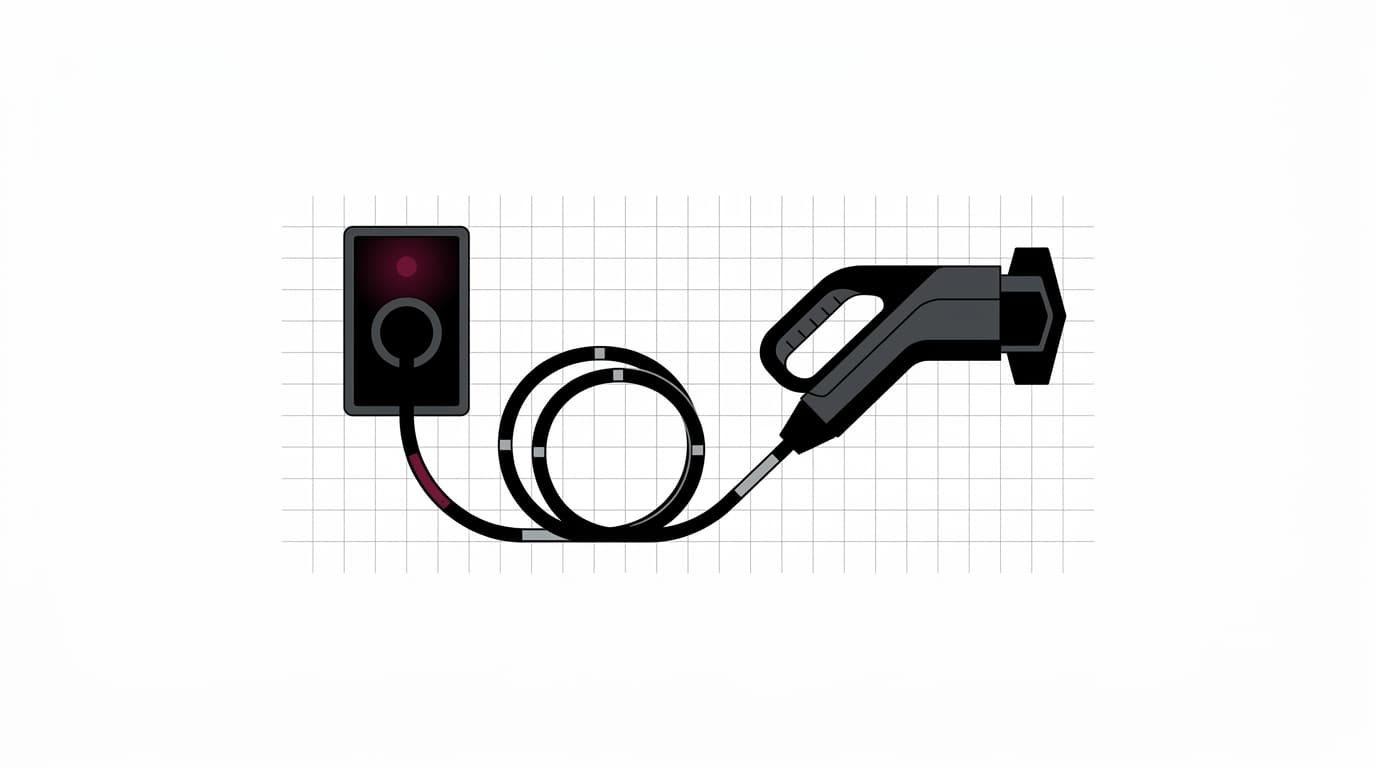
Rarely both by the same contract, and that is the classic trap. The charging cable is a removable accessory: it is only covered if the contract mentions it explicitly. Several insurers exclude it by default, or compensate it with a modest cap under theft cover — a sensitive point if you regularly charge on the street or in a public car park.
The home charging point falls under a different contract: your home insurance covers it, because a wall-mounted wallbox is legally a building installation. The risks covered are fire, power surge, water damage, storm and vandalism. Installation costs €1,000 to €3,000 in Belgium: heavy enough to justify a call to your home insurer the day the unit goes up. An undeclared installation can complicate compensation for an electrical claim.
| Item | Covered by | Condition to check |
|---|---|---|
| Traction battery | Car insurance (omnium) | Depreciation rate, cap, leased battery |
| Cable and connector | Car insurance, if stated | Theft outside the vehicle, cap |
| Home wall unit | Home insurance | Declaration of the installation, power surge |
| Running out of charge | Assistance cover | Towing to a charging point, home assistance |
| Battery wear | Manufacturer's warranty | Capacity threshold, duration (often 8 years) |
What does assistance cover if you run out of charge?
It depends entirely on the contract, and this is the most underestimated clause. In a classic assistance contract, running out of fuel — hence of charge — is often treated as driver negligence and excluded. An electric driver stranded on the motorway hard shoulder may discover that towing is not covered.
Plans designed for electric cars fix this with two concrete guarantees: towing to the nearest charging point (rather than to a garage), and home assistance when the battery is flat outside your own door. Some add fire extinguishing and securing costs after a fire, a cost specific to lithium-ion batteries that can be substantial. Also check the operating radius and cover abroad if you drive across the border.
Do you need full omnium for an electric car?
Yes, during the first years at least. The logic is the same as for a petrol car, but amplified: the purchase value is high, the battery concentrates the financial risk, and an at-fault claim on a €40,000 vehicle is very hard to absorb without cover.
The classic reasoning applies afterwards. When residual value falls and the annual premium exceeds around 10% of the vehicle's value, mini-omnium becomes rational again — with one caveat specific to electric cars: mini-omnium covers theft and fire, hence most of the battery risk outside at-fault accidents. It is often a sensible compromise on a 6 or 7 year old electric car. If you hesitate between the two levels, our guide on mini-omnium or full omnium details the thresholds, and the personalised quiz combines the vehicle's age, its value and your budget to decide.
Which Belgian insurers cover electric cars well?
All the big names on the Belgian market now insure electric vehicles — AG Insurance, Ethias, AXA, Belfius Direct, KBC, Yuzzu, P&V, Baloise — but with noticeably different coverage scopes. Some have created a dedicated plan, others simply offer an optional extension to their classic omnium.
Three criteria usefully separate them. First, how the battery is treated: compensation at purchase value or with depreciation, and any cap. Second, assistance: towing to a charging point, home assistance, cover abroad. Third, the cable: included or not, and with what cap. The companies' official product pages set these out — those of KBC and Baloise are among the most explicit on battery cover. For a compared overview, see our ranking of the best car insurers in Belgium.
A word on your rights: in Belgium, insurers and intermediaries are supervised by the FSMA, and if a dispute with your company remains unresolved, you can refer it free of charge to the Insurance Ombudsman. Two useful reflexes when a battery claim turns into a disagreement.
Verdict: how should you insure your electric car?
In practice, the premium is not the right starting point for an electric car. Two contracts advertised at the same price can differ by several thousand euros on the day the battery has to be replaced. Start by comparing the offers based on your model and profile, then move to the ranking of the best car insurers to check, company by company, the quality of the claims service. And if you are still unsure about the level of cover, the quiz takes two minutes.
Formules & garanties comparator
Compare all formules & garanties side by side.
Compare now
Frequently asked questions
Grégory conseille des automobilistes belges sur leurs contrats d'assurance depuis plus de dix ans. Il décortique les formules RC, mini-omnium et omnium, compare les compagnies du marché belge et traduit les conditions générales en langage clair. Sa règle : aucune recommandation sans avoir lu les exclusions.